Shaded Relief
Welcome

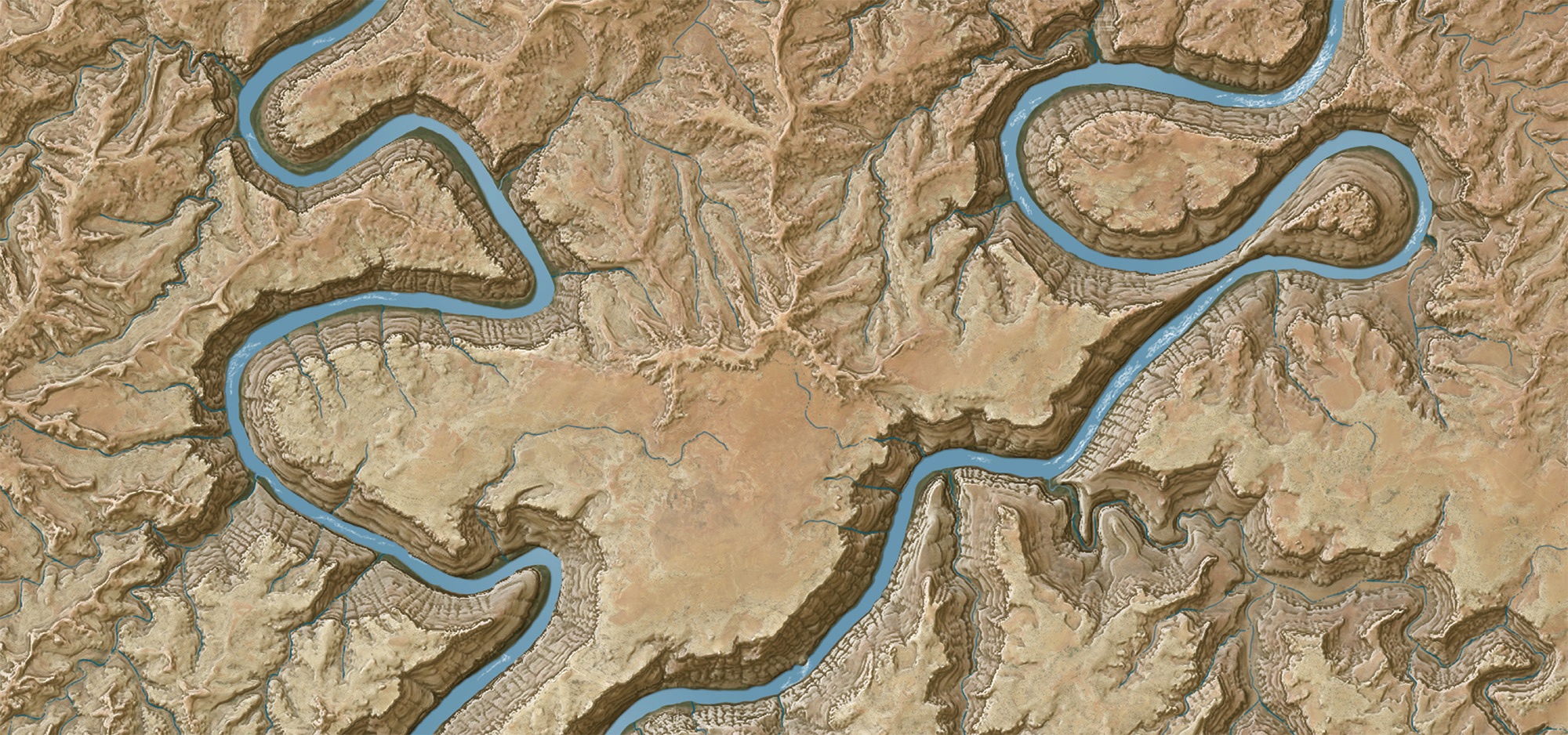
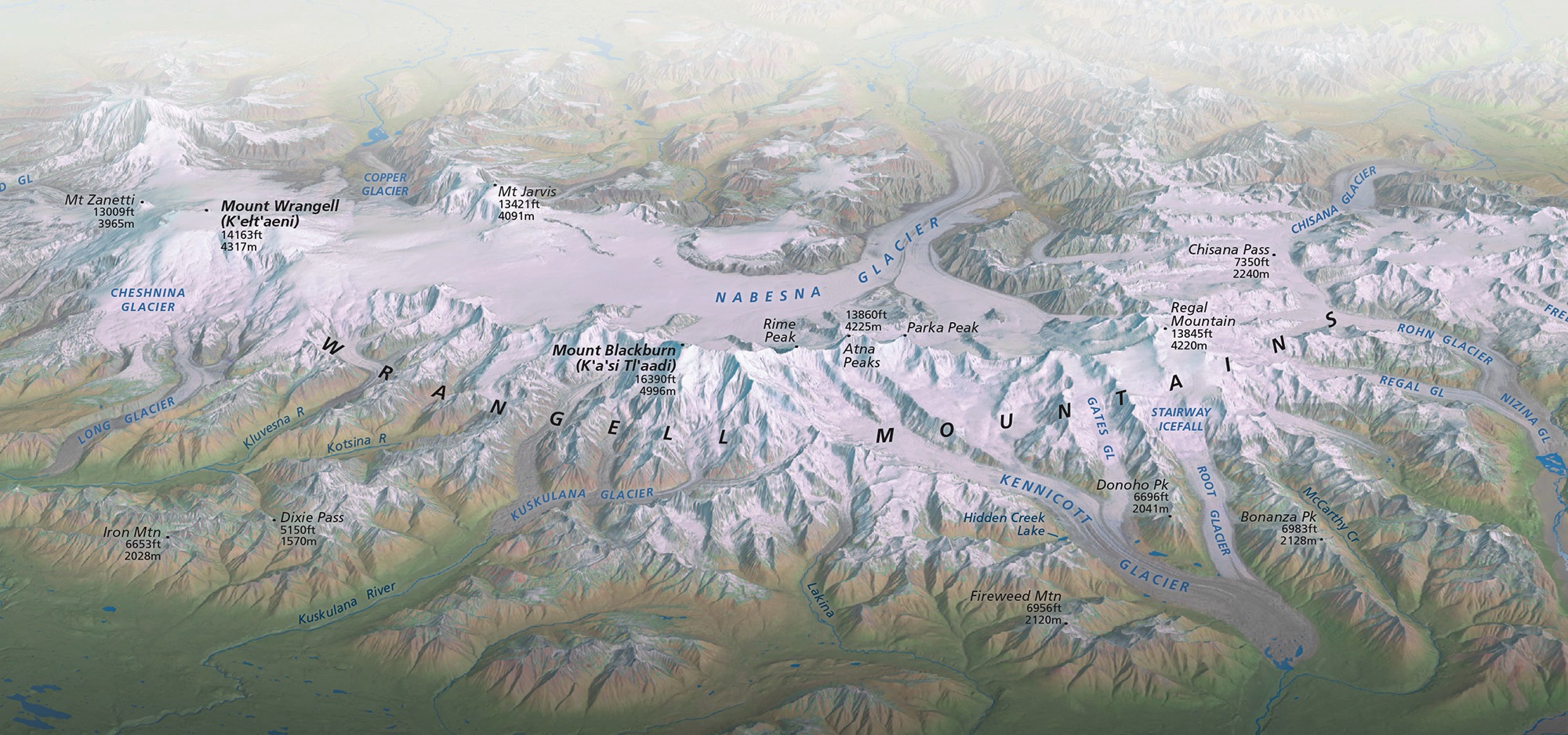
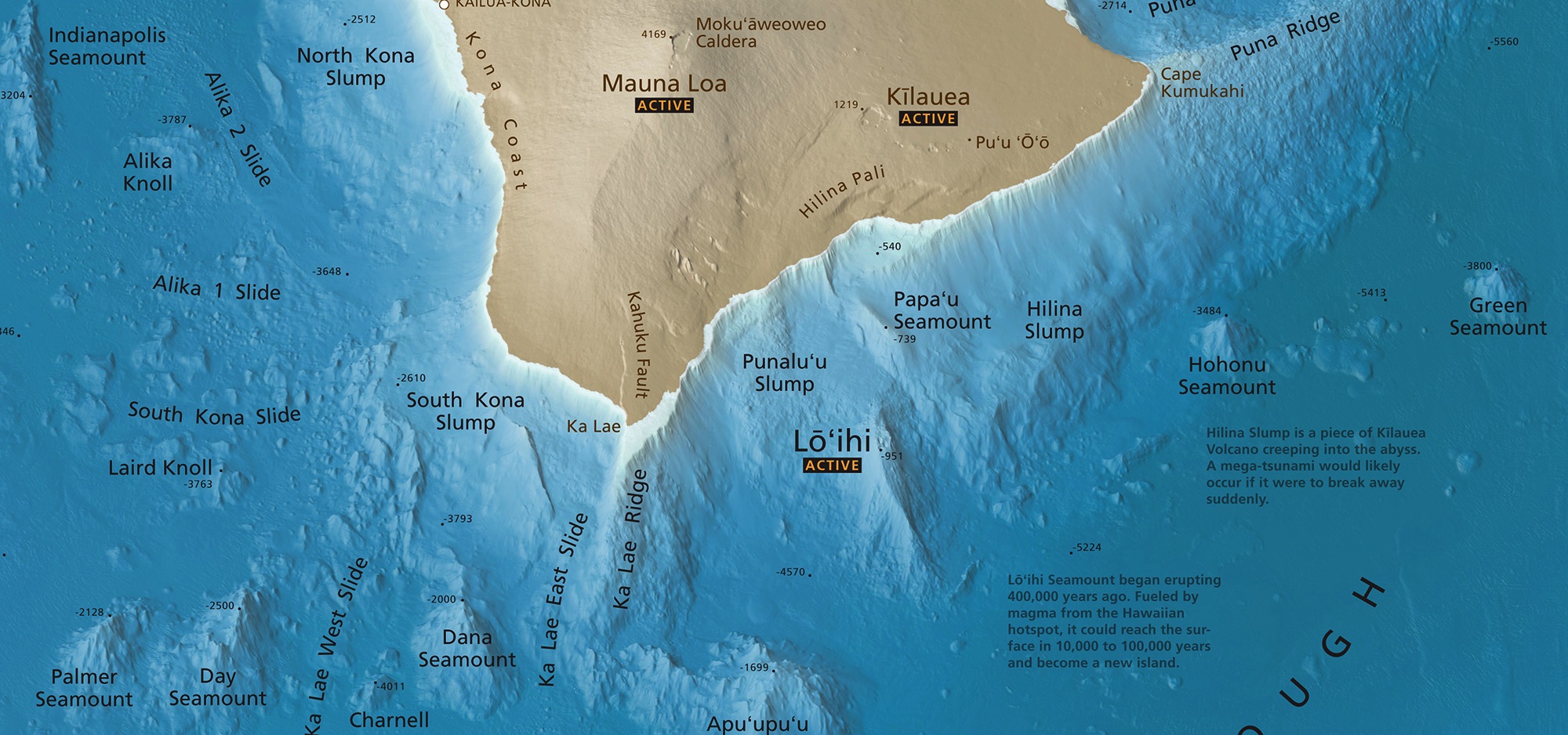
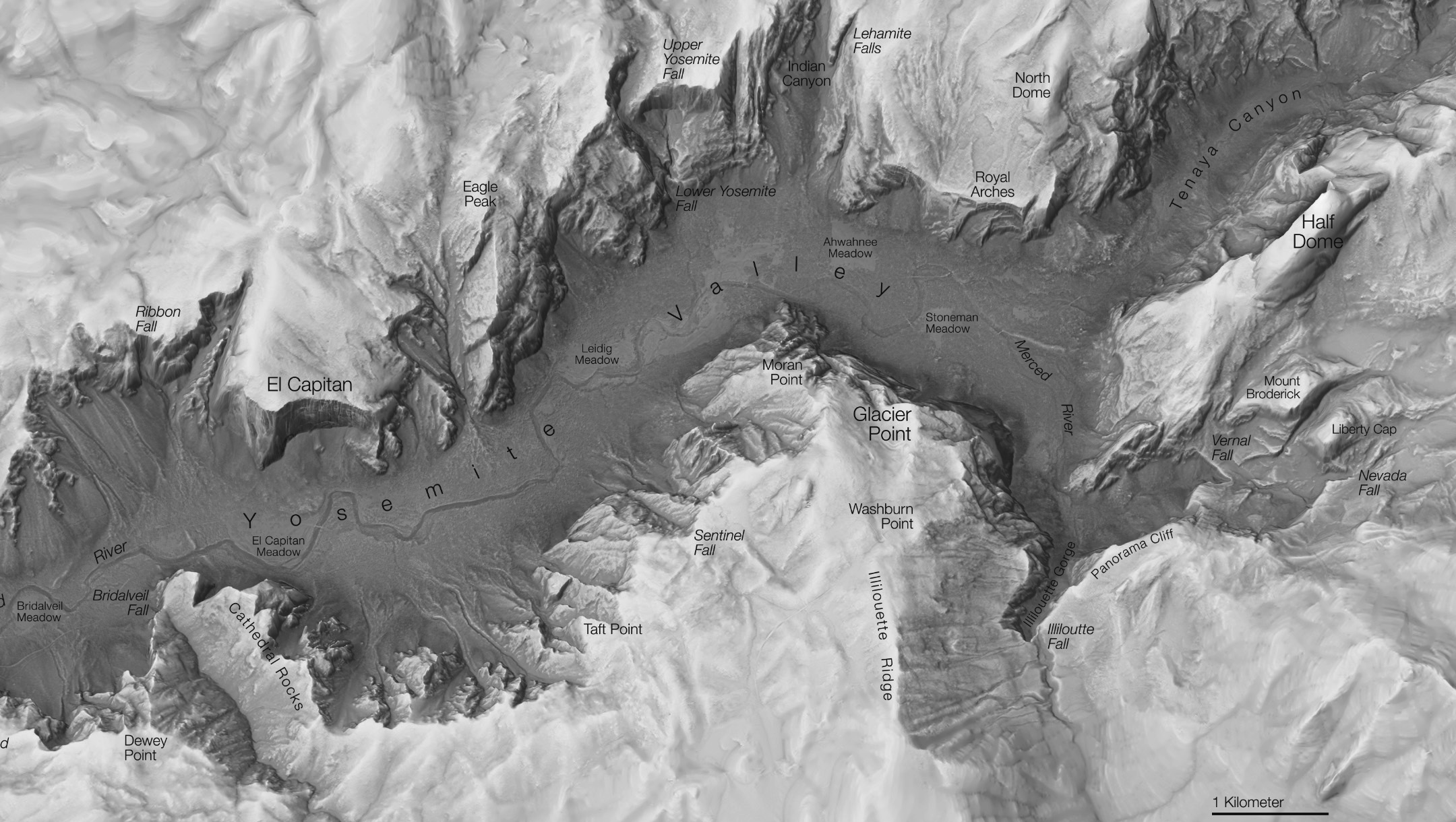
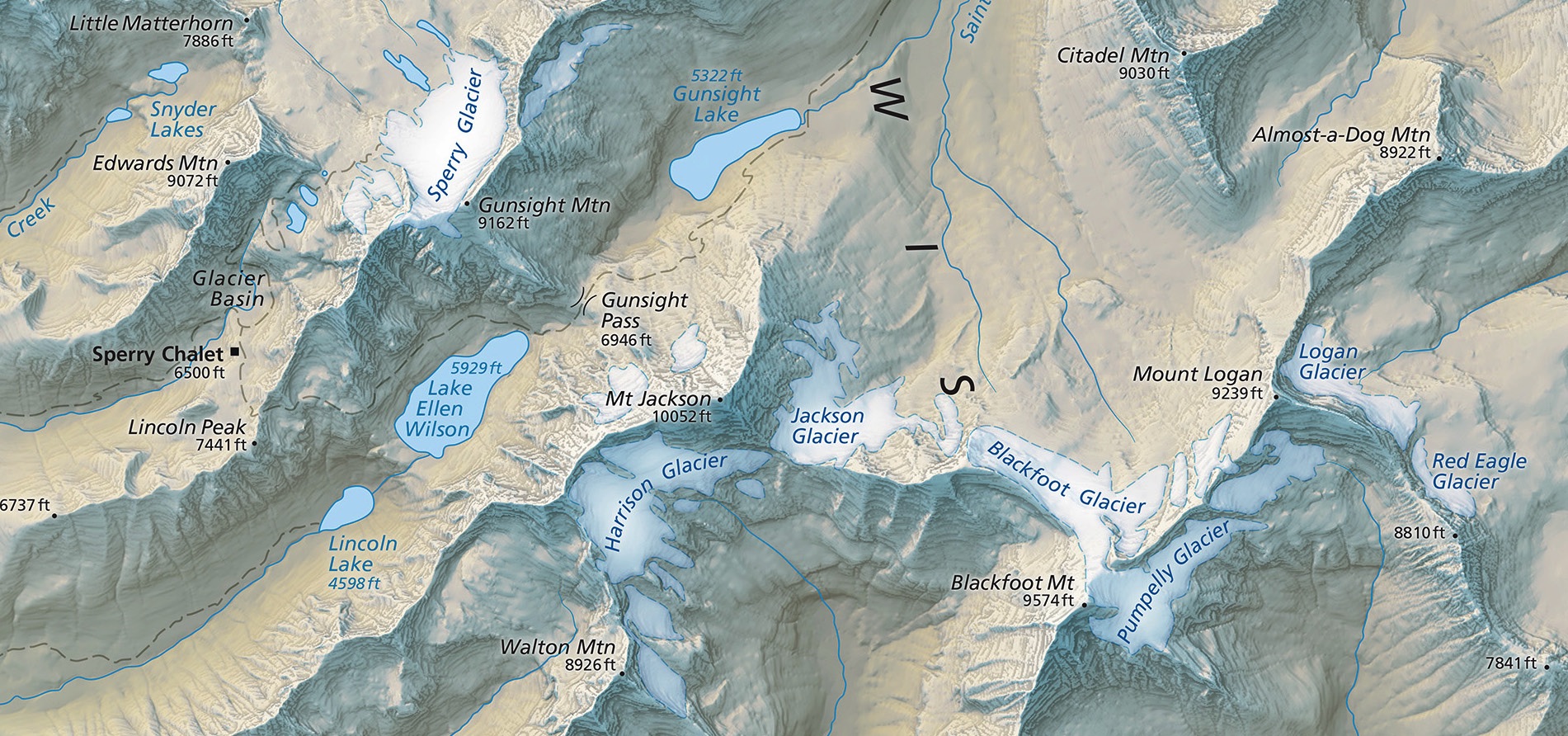
The goal of this site is to assist practicing cartographers with the presentation of shaded relief and related raster art on maps. I developed the techniques to support my work as a cartographer for the US National Park Service, Harpers Ferry Center.

For additional information about shaded relief I recommend that you visit this excellent website: www.reliefshading.com.

Tom Patterson...Bio
Updated: June 1, 2009
Disclaimer and copyright
Sneak
peek!
World Relief Map with Cross-blended Hypsometric Tints
Raster map art featuring world elevations depicted with natural colors. Final product to be released October 2009.

Natural Earth III – Data for Visualizing Earth from Space
Raster map data for creating illustrations and animations of Earth, including realistic land cover textures, 3D mountains, custom cloud maps, polar sea ice, and city lights at night. Check out the gallery for desktop pictures of Earth as you have never seen it before.

Natural Earth II – World Environment Map Data in Natural Color
Natural Earth II is a raster map dataset that portrays the world environment in an idealized manner with little human influence. A successor dataset to the original Natural Earth, the smoothly blended colors and shaded relief make it an ideal base for general-purpose mapping.

Natural Earth I – World Land Cover Map Data
A raster base map of Earth made from public domain data featuring combined land cover and shaded relief. Peruse a gallery of dramatic landscapes from around the world, download a poster-sized wall map, or download data for making custom maps of your own.

Physical Map of the World
Available for free, this detailed map of the world map features three-dimensional topography, thousands of place name labels, and a new pseudocylindrical map projection. You can view interactively online or download it for printing as a large wall map. UPDATE: German version now available: Physische Karte der Erde.

Physical Map of the Coterminous United States
Here you can download a big, detailed, and colorful wall map of the US (minus Alaska and Hawaii). Features include plan oblique relief, cross-blended hypsometric tints, and over 1,000 physical feature labels. Page and web-size versions of the map are available, as are map galleries and an interactive viewer for exploring the terrain up-close.

CleanTOPO2
This is a merged bathymetric and terrestrial elevation dataset of the entire world based on SRTM30 Plus—but with fewer unsightly artifacts. It is available in three versions, each designed for a different mapping purpose.
New! Flex Projector—Interactive Software for Designing World Map Projections (2.0 MB)

A disussion of Flex Projector software and the development of the Natural Earth projection, a pseudocylindrical projection designed specifically for presenting world physical data. Published in Cartographic Perspectives (No. 59, Winter 2008), the journal of the North American Cartographic Information Society (NACIS).

Introducing Plan Oblique Relief (2.5 MB)

Read about plan oblique relief, a new digital technique for rendering three-dimensional terrain on planimetric maps. Published in Cartographic Perspectives (No. 57, Spring 2007), the journal of the North American Cartographic Information Society (NACIS).

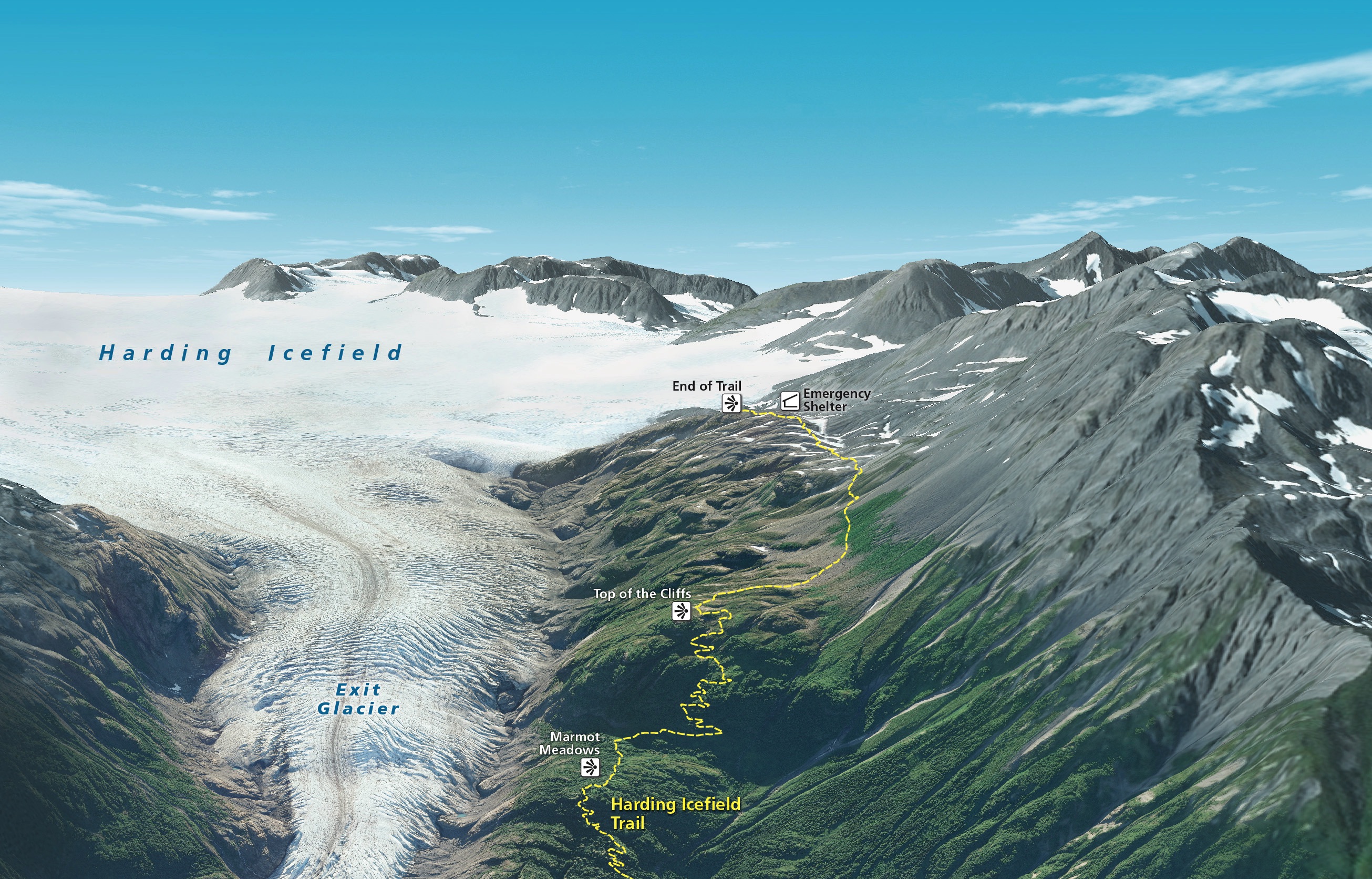
Developing a New Visitor Map of Glacier Bay National Park, Alaska

Producing a National Park Service visitor map is a collaborative effort involving many people. The article discusses this and the challenge of mapping a remote mountain and marine wilderness for a most unique audience of park visitors—cruise ship passengers.

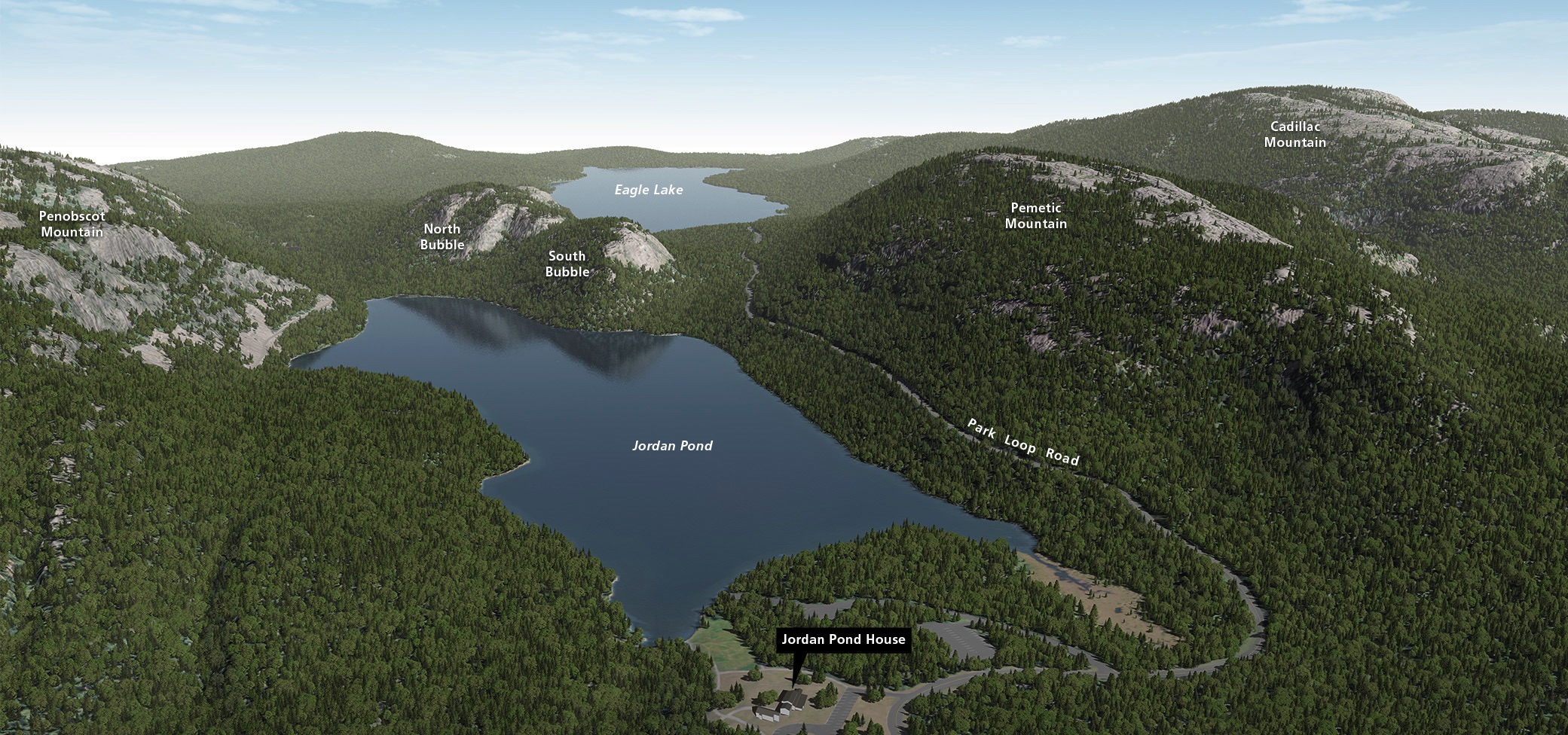
Looking Closer: A Guide to Making Bird's-eye Views of National Park Service Cultural and Historical Sites
In-depth discussion of NPS bird's-eye views and practical design and production tips about large-scale 3D mapping. The accompanying image gallery showcases some 30 years of work by NPS contract illustrators, in both traditional and digital forms. Published in Cartographic Perspectives (No. 52) Fall 2005.
Hal Shelton Revisited: Designing and Producing Natural-Color Maps with Satellite Land Cover Data
Based on Hal Shelton's pioneering work a half century ago, this paper discusses how to produce natural-color maps with digital data. An image gallery takes you on a cartographic tour of North America from the arctic archipelago of Canada to the volcanoes of southern Mexico. First published in Cartographic Perspectives (No. 47, Winter 2004).
Using Cross-blended Hypsometric Tints for Generalized Environmental Mapping
A technique in Photoshop for systematically creating continuous-tone hypsometric tints that mimic natural vegetation colors. Small-scale maps are the intended use.
Getting Real: Reflecting on the New Look of National Park Service Maps
An examination of the techniques developed by the NPS for designing 2D plan maps with a faux realistic look. A gallery of images rewards readers who make it all the way to the end. Published in Cartographic Perspectives (No. 43) Fall 2002.
DEM Manipulation and 3D Terrain Visualization: Techniques used by the U.S. National Park Service
This illustrated piece discusses the manipulation of raw DEM data in Photoshop for creating 3D cartographic special effects. Published in the special ICA Commission on Mountain Cartography issue (Vol. 38) of Cartographica, the journal of the Canadian Cartographic Association.
A View from on High: Heinrich Berann's Panoramas and Landscape Visualization Techniques for the U.S. National Park Service
This paper analyzes the work of the late Heinrich Berann, the master traditional panoramist from Lans, Austria. The article includes illustrations comparing Berann's panoramas to digital landscapes and four hi-res panoramas for downloading (great for making screen savers). The paper was first presented at the 2000 ICA Mountain Cartography Workshop, Rudolfshutte, Austria and was later published in the Spring 2000 issue (Vol. 36) of Cartographic Perspectives.
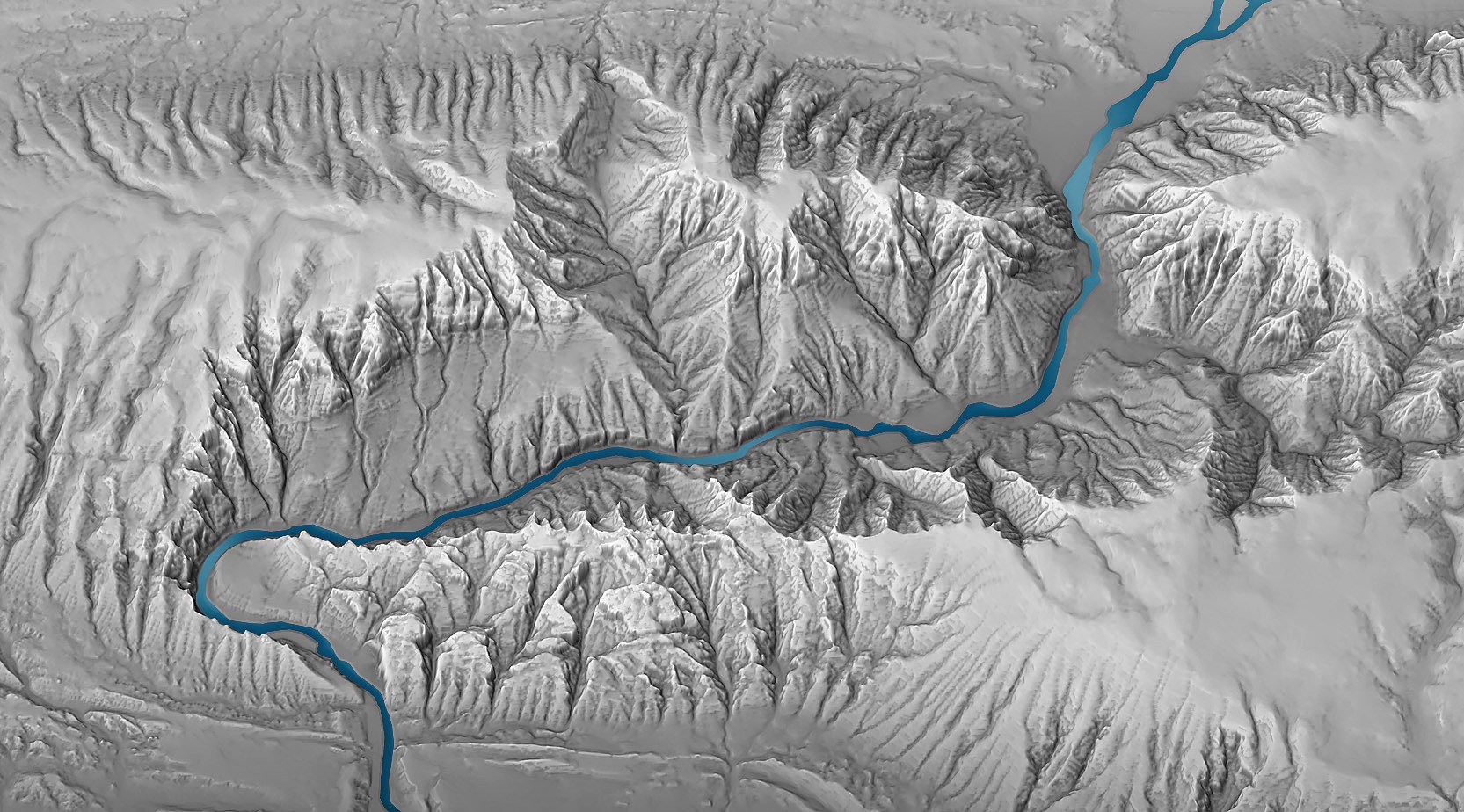
A Desktop Approach to Shaded Relief Production
An examination of shaded relief production and presentation techniques using Photoshop 4.0 and higher. The article appeared in the Winter 1997 (No. 36) issue of Cartographic Perspectives, the journal of the North American Cartographic Information Society (NACIS).
3D Landscape Presentation: Experiments at the U.S. National Park Service
An illustrated paper that reports on techniques developed by the National Park Service for the production, presentation, and manipulation of 3D landscapes. Presented at the 1998 Mountain Cartography Workshop, Bielerhöhe, Austria.
New! Importing USGS NED and SRTM Elevation Data into Bryce 6.1
Use National Elevation Dataset (NED) and SRTM (Space Shuttle Radar Topography Mission) elevation data of the US and world in Bryce 6.1 at full 16-bit resolution.
Creating 3D Relief on 2D Planimetric Maps
A technique using Bryce and Photoshop software to bring the 3D terrain depiction found on panoramas to ordinary flat maps.
Creating value-enhanced shaded relief in Photoshop
This tutorial introduces a four-step procedure in Adobe Photoshop for enhancing previously rendered shaded relief so that they contain both contrast and detail
See the light: How to make illuminated shaded relief in Photoshop 6.0
A simple technique for adding illumination to shaded relief using an adjustment layer and the Hue/Saturation dialog.
How to drape a satellite image onto a DEM in Bryce 5
Create a 3D landscape visualization of the Big Island of Hawaii by merging a sample satellite image with a DEM. Eye-catching results can be achieved in minutes. The tutorial also briefly covers bump mapping and how to make block bases.
Importing large-format 16-bit DEMs into Bryce 5
With version 5, Bryce has become even better suited for 3D landscape visualization. This tutorial shows you how to easily import large DEMs, up to 4,096 height samples in width, into Bryce at full 16-bit resolution.
Resolution bumping GTOPO30 in Photoshop: How to make high mountains more legible
This procedure explains how to manipulate small-scale digital elevation data in Photoshop to give rugged high mountains a more natural appearance on shaded relief and 3D scenes.
Retro Relief Shading with Adobe Photoshop and a Wacom Tablet
An examination of manual/digital techniques for enhancing digitally-generated shaded relief. It includes a discussion of relief shading concepts, before and after illustrations, and a two-minute long animation, from start to finish, of manual shading in Adobe Photoshop.
Colorizing grayscale Digital Orthophoto Quadrangles (DOQs) in Photoshop
Includes a step-by-step tutorial, illustrations, and a downloadable sample file.
Making 3D block maps in Bryce
Techniques in Bryce for presenting DEMs on 3D block bases and extruding geographic shapes as slabs.
Creating Swiss-style shaded relief in Photoshop
This tutorial explains how to convert typical digital shaded relief to the style used on Swiss topographic maps. The site contains a downloadable Photoshop Action to automate shaded relief conversion.
Natural Scene Designer 4.0 Pro
NSD 4 Pro for Mac OSX and Windows gives cartographers a user-friendly and affordable tool for reprojecting and georeferencing large 16-bit DEMs and raster images—up to 26,000 x 26,000. It also registers geocoded images and terrains; renders 2D shaded relief, 3D panoramas, and fly-through animations; and, imports and exports to a variety of elevation data formats.
Proceedings - 2002 ICA Mountain Cartography Workshop
Abstracts, papers, and presentations from the 2002 Workshop held 1,829 meters/6,000 feet above sea level on the volcanic slopes of Mt. Hood, Oregon. The workshop, which is held biannually, covers all topics related to mountain mapping, including shaded relief and 3D mapping.
CartaPGM plugin
A Mac plug-in for Photoshop that reads and writes files in the Portable Gray Map (PGM) format.